











The demand for specialized neurological care across borders is accelerating as patients seek advanced diagnostics, shorter wait times, and highly personalized treatment plans. In this environment, communication is not simply a convenience but a clinical necessity. Multilingual neurology clinics are redefining international care by ensuring that patients, families, and medical teams operate with clarity and confidence at every stage of treatment. This shift is particularly important in neurology, where symptoms are complex, histories are nuanced, and outcomes often depend on precise understanding.
Why Multilingual Communication Matters in Neurology
Neurology is one of the most communication-intensive specialties in medicine. From initial consultations to post-treatment follow-up, accurate dialogue between patient and provider is essential for proper diagnosis and effective treatment planning. Even minor misunderstandings can lead to misinterpretation of symptoms or delays in care, which may significantly affect outcomes.
Multilingual clinics address this challenge by integrating language capabilities directly into the care pathway. This means patients can describe symptoms in their native language, understand diagnostic findings clearly, and make informed decisions without relying solely on third-party translation. It also reduces emotional stress, which is often heightened in neurological cases where uncertainty and anxiety are common.
In addition, multilingual communication enhances trust. Patients traveling internationally often face unfamiliar systems and environments. When care teams speak their language fluently, it builds confidence and fosters a stronger therapeutic relationship that supports better adherence to treatment plans.
Key Advantages of Multilingual Neurology Clinics
Multilingual neurology centers are not simply offering translation services. They are structuring their entire patient experience around accessibility, cultural sensitivity, and clinical precision. This creates a more cohesive and patient-centered approach to care.
Several core advantages define these clinics:
- Multilingual clinical teams ensure that patients can communicate directly with neurologists, nurses, and coordinators without relying on intermediaries, which reduces the risk of miscommunication and improves clinical accuracy.
- Cultural competence within multilingual environments helps providers better understand patient expectations, health beliefs, and decision-making preferences, leading to more personalized and effective treatment plans.
- Streamlined administrative processes in multiple languages make it easier for patients to navigate scheduling, documentation, and insurance coordination, minimizing delays and confusion.
- Improved patient safety is achieved through clear communication about medications, procedures, and follow-up care instructions, which is especially critical in complex neurological treatments.
These advantages collectively enhance both clinical outcomes and patient satisfaction. They also contribute to a more efficient care pathway, which is increasingly important for international patients managing time-sensitive conditions.
Global Accessibility and Cost Considerations
One of the primary drivers of medical tourism is the opportunity to access high-quality care at competitive costs. Neurological treatments, particularly those involving advanced diagnostics or minimally invasive procedures, can be significantly more affordable in select international destinations without compromising quality.
At the same time, multilingual support ensures that cost transparency is maintained. Patients are better equipped to understand pricing structures, treatment options, and potential additional expenses when information is presented clearly in their preferred language.
Patients seeking high-quality neurological care abroad can confidently explore this provider’s detailed profile and treatment capabilities through Better by MTA to make informed comparisons.
Beyond cost, accessibility also includes reduced waiting times and faster access to specialists. In many regions, patients face long delays for neurological consultations or procedures. International clinics with multilingual staff can offer expedited scheduling while maintaining clear communication throughout the process.
The Role of Technology in Multilingual Neurological Care
Technology is playing a transformative role in how multilingual neurology clinics operate. Digital platforms, telemedicine tools, and integrated patient management systems are enabling seamless communication across languages and borders.
Teleconsultations allow patients to engage with neurologists before traveling, ensuring that initial assessments and treatment planning are already in progress. This reduces uncertainty and helps patients prepare more effectively for their journey. Multilingual digital interfaces further enhance this experience by providing access to medical records, imaging results, and care instructions in multiple languages.
Artificial intelligence and translation tools are also supporting clinical workflows, although they are typically used in conjunction with human expertise rather than as replacements. The goal is to create a layered communication system that prioritizes accuracy while maintaining efficiency.
Importantly, technology also supports continuity of care. After returning home, patients can continue to communicate with their care teams in their native language, ensuring that follow-up care is consistent and well-coordinated.
Patient Experience in Multilingual Neurology Centers
The patient journey in a multilingual neurology clinic is designed to minimize friction and maximize clarity. From the first inquiry to post-treatment follow-up, every interaction is structured to support understanding and comfort.
Initial consultations typically involve detailed discussions of symptoms, medical history, and diagnostic needs. In a multilingual setting, patients can express themselves fully, which leads to more accurate assessments. This is particularly important in neurology, where symptoms may be subtle or difficult to describe.
During treatment, clear communication ensures that patients understand each step of the process. Whether undergoing imaging, medication management, or surgical intervention, patients are kept informed in a way that reduces anxiety and builds confidence.
After treatment, multilingual support continues through rehabilitation guidance, medication instructions, and follow-up consultations. This continuity is essential for achieving optimal outcomes, especially in conditions that require long-term management.
Choosing the Right Multilingual Neurology Clinic
Selecting a neurology clinic abroad involves evaluating multiple factors beyond language capabilities. While multilingual support is critical, it should be integrated within a broader framework of quality, safety, and patient-centered care.
When assessing options, patients and facilitators often consider the following elements:
- The clinic’s experience in treating specific neurological conditions, ensuring that expertise aligns with the patient’s diagnosis and treatment needs.
- The availability of comprehensive services, including diagnostics, treatment, and rehabilitation, which allows for a seamless and coordinated care experience.
- Accreditation and adherence to international standards, which provide assurance of quality and patient safety across all aspects of care.
- The strength of patient support services, including travel coordination, accommodation assistance, and ongoing communication in multiple languages.
These considerations help ensure that patients select a provider capable of delivering both clinical excellence and a positive overall experience. Multilingual capabilities enhance these factors but should be viewed as part of a holistic evaluation.
The Strategic Value for Healthcare Stakeholders
Multilingual neurology clinics are not only beneficial for patients but also represent a strategic advantage for healthcare systems, insurers, and facilitators. As cross-border care continues to expand, the ability to communicate effectively with diverse patient populations becomes a key differentiator.
For insurers and employers, partnering with multilingual providers can improve outcomes while controlling costs. Clear communication reduces the likelihood of complications, readmissions, and misunderstandings, all of which contribute to more efficient care delivery.
Facilitators benefit from smoother coordination and higher patient satisfaction, which strengthens their reputation and operational efficiency. Providers, in turn, can expand their international reach by offering services that meet the needs of a global patient base.
As international patients evaluate their options, Better by MTA enables them to access a comprehensive overview of this neurology provider’s services and capabilities in a transparent and structured format.
This ecosystem approach highlights the growing importance of multilingual care as a foundational component of global healthcare delivery.
Future Trends in Multilingual Neurological Care
The evolution of multilingual neurology clinics is closely tied to broader trends in medical tourism and digital health. As patient expectations continue to rise, providers are investing in more sophisticated communication strategies and technologies.
One emerging trend is the integration of personalized language support throughout the entire care journey. This includes not only clinical interactions but also educational resources, rehabilitation programs, and patient engagement tools tailored to individual preferences.
Another trend is the expansion of remote care capabilities. Telemedicine is becoming increasingly central to neurological care, allowing patients to access expertise without geographic constraints. Multilingual platforms ensure that these interactions remain effective and meaningful.
Finally, there is a growing emphasis on data-driven care. Multilingual clinics are leveraging patient data to refine treatment protocols and improve outcomes. By combining clinical expertise with advanced analytics, these providers are setting new standards for international neurological care.
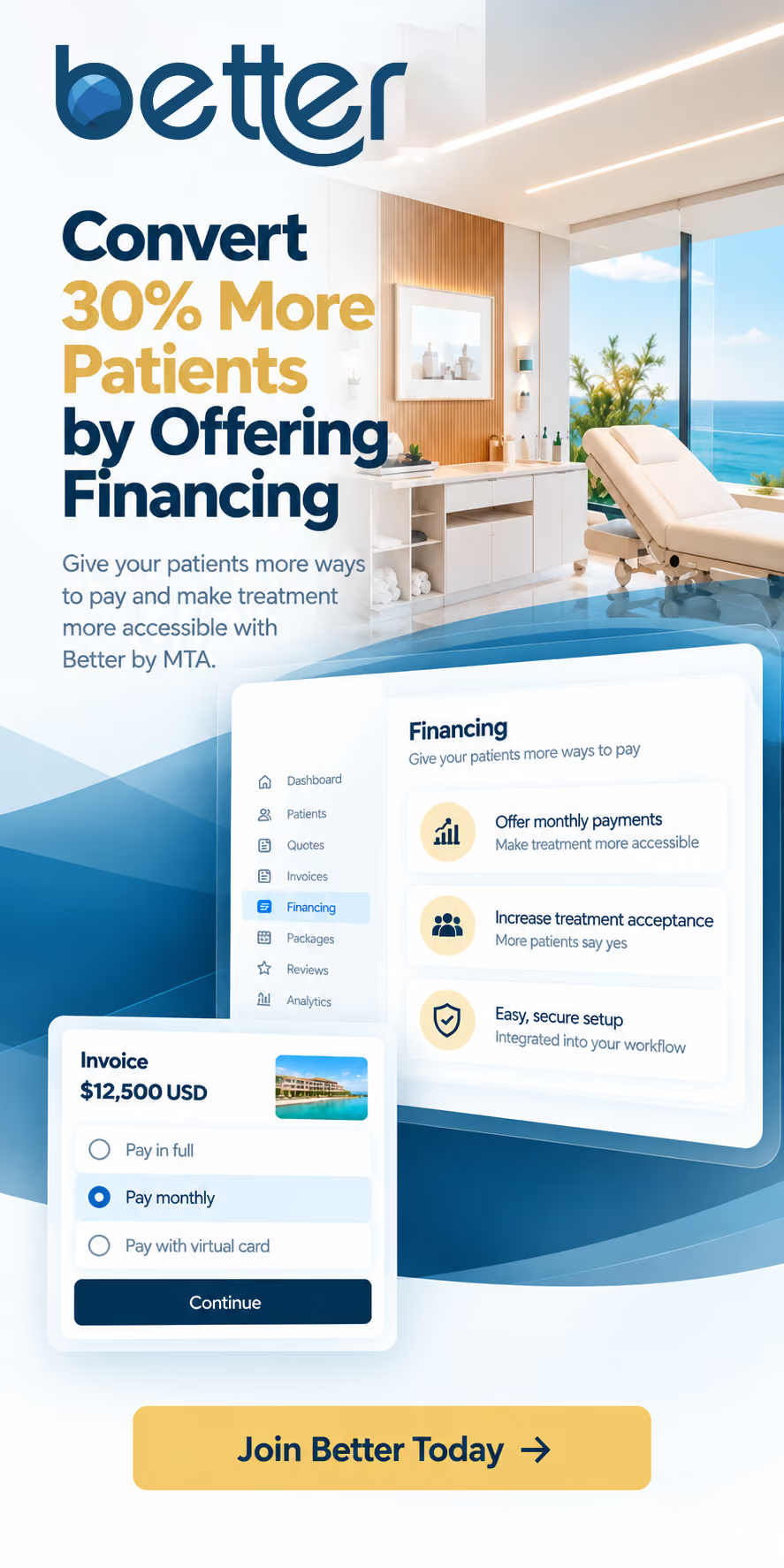
Looking at the full picture, multilingual neurology clinics are reshaping the landscape of global healthcare by prioritizing communication, accessibility, and patient-centered design. Their ability to bridge linguistic and cultural gaps is not only enhancing individual patient experiences but also driving systemic improvements across the medical tourism industry. When you are ready to move forward, Better by MTA connects you with trusted providers operating under MTA-accredited standards and supported by Mastercard-secured payment protection, allowing you to request a personalized quote with confidence and move ahead without uncertainty.


