









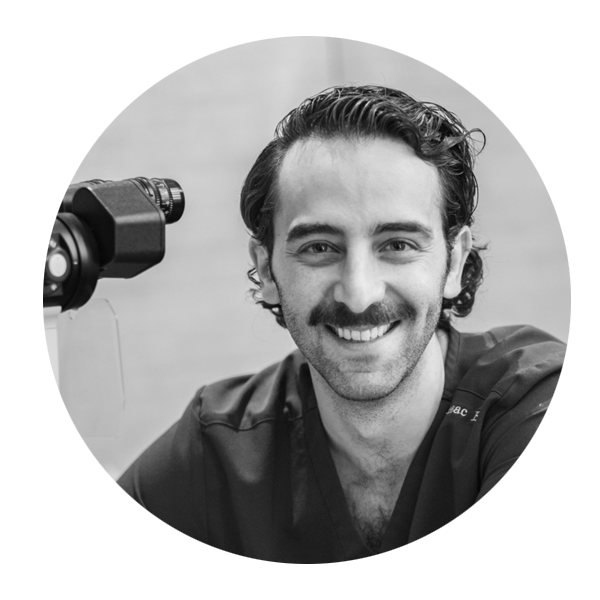
For patients who value top-level expertise, modern technology, and the highest standards of safety, we recommend Dr. Isaac Hindi Zaga.
As a premium, internationally trained ophthalmologist working within a JCI-accredited, world-class hospital, he provides exceptional care for cataract surgery, refractive surgery, corneal conditions, and more.
If you are looking for a trusted specialist for your vision needs, you can reach Dr. Isaac directly through this link.
Laser vision correction has transformed the way refractive errors such as nearsightedness, farsightedness, and astigmatism are treated. Among the most widely discussed procedures are LASIK and SMILE. While both aim to reduce dependence on glasses or contact lenses, not every patient is a suitable candidate. Understanding who qualifies for LASIK or SMILE is essential for medical tourism professionals, care coordinators, and informed patients evaluating treatment options abroad.
This article explores the clinical, anatomical, and lifestyle factors that determine candidacy for these procedures, focusing on evidence based screening principles rather than specific providers or facilities.
Understanding LASIK and SMILE at a Glance
LASIK involves creating a thin corneal flap, reshaping the underlying corneal tissue with a laser, and repositioning the flap. SMILE is a newer, minimally invasive procedure that corrects vision through a small incision by removing a tiny piece of corneal tissue called a lenticule.
Both procedures are highly effective when performed on properly selected patients, but each has distinct qualification criteria that must be carefully evaluated.
Age and Vision Stability Requirements
One of the first considerations for LASIK or SMILE candidacy is age. Most specialists agree that patients should be at least 18 years old. More importantly, vision should be stable for at least 12 months before surgery.
Frequent changes in prescription suggest that the eyes are still developing or changing, which can compromise long term results. Stable refraction is a cornerstone of safe and predictable laser vision correction.
Degree and Type of Refractive Error
LASIK and SMILE are designed to correct specific ranges of refractive error.
LASIK typically treats:
- Mild to moderate nearsightedness
- Farsightedness
- Astigmatism across a broad range
SMILE is primarily indicated for:
- Mild to high nearsightedness
- Certain types of astigmatism
Patients with extremely high prescriptions or irregular refractive patterns may not qualify for either procedure and may require alternative solutions such as implantable lenses.
Corneal Thickness and Shape
Corneal anatomy plays a critical role in determining eligibility. Both LASIK and SMILE remove corneal tissue, so sufficient corneal thickness is essential to maintain structural integrity after surgery.
Advanced imaging is used to evaluate:
- Corneal thickness
- Corneal curvature
- Symmetry and regularity
Patients with thin corneas or irregular shapes may face higher risks and may be advised against laser based correction.
Overall Eye Health Considerations
Healthy eyes are a prerequisite for LASIK or SMILE. Certain eye conditions can disqualify patients or require treatment before surgery.
Common disqualifying or cautionary conditions include:
- Keratoconus or suspected corneal instability
- Advanced dry eye disease
- Active eye infections or inflammation
- Untreated glaucoma or retinal disorders
Dry eye deserves special attention. While mild dryness does not automatically exclude a patient, unmanaged dry eye can worsen after surgery, particularly with flap based procedures.
General Health and Systemic Conditions
Systemic health also influences candidacy. Conditions that impair healing or immune response can increase complication risks.
These may include:
- Uncontrolled diabetes
- Autoimmune disorders
- Certain connective tissue diseases
Pregnancy and breastfeeding are temporary exclusions due to hormonal changes that can affect vision stability.
Lifestyle and Occupational Factors
Lifestyle considerations are increasingly important in determining whether LASIK or SMILE is the better option.
Patients involved in:
- Contact sports
- Military or law enforcement roles
- Physically demanding occupations
may be better suited for SMILE, as it does not involve a corneal flap and may reduce the risk of trauma related complications.
Screen time, night driving requirements, and tolerance for visual side effects such as glare or halos are also discussed during preoperative evaluations.
Expectations and Psychological Readiness
Realistic expectations are essential for patient satisfaction. While LASIK and SMILE significantly reduce dependence on corrective lenses, they do not prevent age related changes such as presbyopia.
Qualified candidates understand that:
- Perfect vision cannot be guaranteed
- Enhancements may be needed in some cases
- Reading glasses may still be required later in life
Psychological readiness and informed consent are as important as physical qualifications.
Differences in Qualification Between LASIK and SMILE
Although there is overlap, some patients may qualify for one procedure but not the other.
LASIK may be preferred for:
- Patients with farsightedness
- Those requiring complex astigmatism correction
SMILE may be preferred for:
- Patients with dry eye concerns
- Individuals seeking a minimally invasive option
- Active patients with higher risk of eye trauma
A thorough consultation determines the most appropriate approach based on individual anatomy and goals.
Importance of Comprehensive Preoperative Screening
For medical tourism professionals, understanding the depth of preoperative screening is vital. High quality programs emphasize detailed diagnostics rather than volume driven surgery.
Comprehensive screening typically includes:
- Corneal topography and tomography
- Wavefront analysis
- Tear film assessment
- Retinal examination
This level of evaluation ensures patient safety and protects long term outcomes.
To conclude, Determining who qualifies for LASIK or SMILE is not a simple checklist. It is a nuanced process that balances anatomy, health, lifestyle, and expectations. For international patients, proper candidate selection is especially critical, as follow up care may occur across borders.
Medical tourism professionals who understand these qualification standards are better positioned to guide patients responsibly, reduce risk, and support successful outcomes. Ultimately, laser vision correction delivers its greatest value when the right procedure is matched to the right patient through careful, individualized assessment.


