









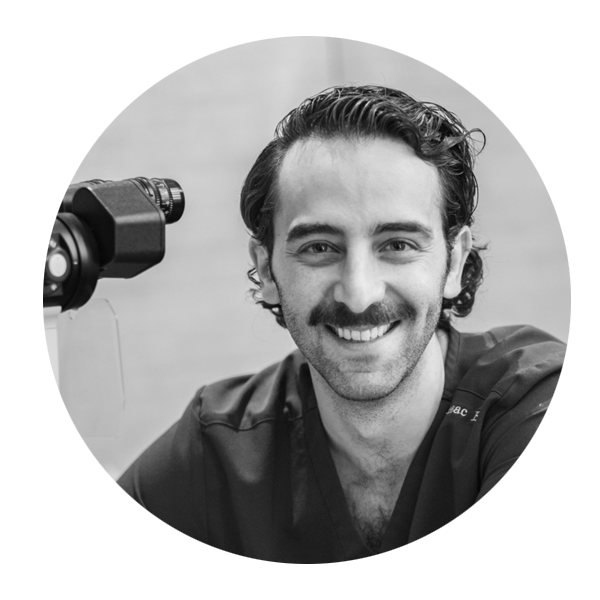
For patients who value top-level expertise, modern technology, and the highest standards of safety, we recommend Dr. Isaac Hindi Zaga.
As a premium, internationally trained ophthalmologist working within a JCI-accredited, world-class hospital, he provides exceptional care for cataract surgery, refractive surgery, corneal conditions, and more.
If you are looking for a trusted specialist for your vision needs, you can reach Dr. Isaac directly through this link.
Vision correction has progressed rapidly over the last two decades. What was once limited to glasses, contact lenses, and basic laser procedures has evolved into a highly data driven, technology enabled specialty. Today’s refractive eye care relies on precision diagnostics, computer guided lasers, and customizable treatment planning to deliver outcomes that were previously unattainable.
For medical tourism professionals, understanding how modern technology is applied in vision correction is essential. Patients are no longer traveling solely for lower costs. They are seeking advanced tools, predictable outcomes, and safety standards that match or exceed those found in their home countries.
Advanced Diagnostic Imaging as the Foundation
Modern vision correction begins long before any procedure takes place. High resolution diagnostic imaging plays a critical role in determining candidacy and selecting the most appropriate treatment option.
Current technology allows clinicians to create three dimensional maps of the cornea, measure corneal thickness with micron level accuracy, and analyze subtle irregularities that were once undetectable. Wavefront analysis evaluates how light travels through the entire optical system of the eye, identifying higher order aberrations that can affect night vision, contrast sensitivity, and visual sharpness.
These tools allow treatment to be personalized rather than standardized. Instead of applying a one size fits all approach, modern systems support highly individualized correction plans that reflect each patient’s unique anatomy and visual demands.
Laser Platforms Designed for Precision and Safety
Laser vision correction technology has advanced significantly in both accuracy and safety. Modern excimer and femtosecond lasers operate at extremely high speeds and are guided by sophisticated eye tracking systems that monitor even the smallest eye movements in real time.
These platforms deliver smoother corneal reshaping, more predictable tissue removal, and reduced risk of complications. Improved energy control minimizes thermal impact, supporting faster healing and greater comfort during recovery.
In addition, newer laser systems allow for minimally invasive techniques that preserve corneal strength. This is particularly important for patients with thinner corneas or higher refractive errors who may not have been candidates in the past.
Implantable Lens Technology for Expanded Options
Not all patients are ideal candidates for laser based vision correction. Advances in implantable lens technology have significantly expanded treatment options for individuals with high myopia, astigmatism, or dry eye concerns.
Modern implantable lenses are designed using biocompatible materials that work in harmony with the natural structures of the eye. They are placed without removing natural tissue and can often be removed or replaced if visual needs change over time.
These lenses provide high definition vision, excellent night performance, and stable long term outcomes. For medical travelers, this technology offers an alternative that combines advanced optics with reversibility, which is an important consideration for long term eye health.
Digital Treatment Planning and Customization
One of the most significant technological shifts in vision correction is the integration of digital planning systems. Advanced software platforms compile diagnostic data, simulate outcomes, and guide treatment execution with exceptional accuracy.
These systems allow clinicians to visualize multiple treatment scenarios and select the option that best balances visual quality, safety, and long term stability. Customization can include adjustments for pupil size, corneal biomechanics, and lifestyle factors such as night driving or screen use.
For patients, this translates into greater confidence and clearer expectations. For medical tourism facilitators, it provides a strong framework for explaining value beyond price.
Artificial Intelligence and Data Driven Decisions
Artificial intelligence is increasingly influencing vision correction planning and outcomes analysis. AI supported platforms can identify patterns across thousands of previous cases, helping refine candidate selection and reduce the risk of postoperative surprises.
By analyzing large datasets, these systems support more consistent outcomes and help clinicians anticipate how individual eyes may respond to treatment. This data driven approach aligns with broader trends in healthcare toward evidence based decision making and continuous improvement.
For international patients, AI enhanced planning contributes to predictability, which is one of the most important factors when choosing to travel for care.
Enhanced Safety and Faster Recovery
Technology has also improved the overall patient experience. Modern procedures are shorter, less invasive, and associated with faster recovery times. Many patients experience functional vision within hours rather than days.
Enhanced sterilization systems, digital monitoring, and refined surgical workflows further support safety. These improvements reduce complication rates and minimize downtime, which is especially valuable for patients who are traveling and operating within limited recovery windows.
What This Means for Medical Tourism Professionals
For industry professionals, advanced vision correction technology represents an opportunity to align patient expectations with measurable quality indicators. Technology driven care supports transparency, reproducibility, and outcomes that can be clearly explained to referring partners, insurers, and case managers.
Patients increasingly ask about specific technologies, diagnostic tools, and customization options. Medical tourism stakeholders who understand these advancements are better positioned to guide informed decision making and build trust across borders.
The Future of Technology Driven Vision Correction
The future of vision correction will continue to move toward greater personalization, integration of digital health tools, and long term outcome optimization. Innovations such as enhanced biomechanical modeling, next generation implants, and expanded AI capabilities are expected to further refine results.
For medical travelers, this means access to care that prioritizes precision, safety, and visual quality. For industry professionals, it reinforces the importance of evaluating providers based on technology adoption, clinical protocols, and data driven performance rather than reputation alone.
To conclude, The latest technology in vision correction has redefined what is possible in refractive eye care. Advanced diagnostics, precision lasers, implantable lenses, and digital planning systems work together to deliver safer, more predictable, and highly customized outcomes.
As medical tourism continues to evolve, technology driven vision correction stands out as a field where innovation directly translates into patient confidence and long term value. Understanding these tools is essential for professionals seeking to guide patients toward high quality, future ready eye care solutions.


