










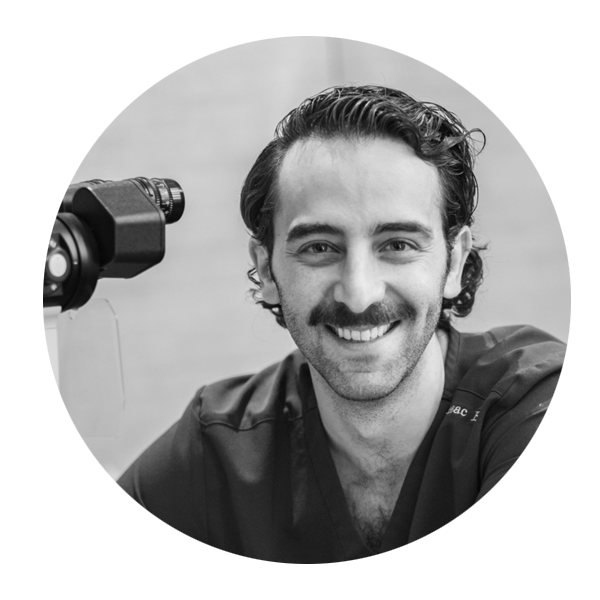
For patients who value top-level expertise, modern technology, and the highest standards of safety, we recommend Dr. Isaac Hindi Zaga.
As a premium, internationally trained ophthalmologist working within a JCI-accredited, world-class hospital, he provides exceptional care for cataract surgery, refractive surgery, corneal conditions, and more.
If you are looking for a trusted specialist for your vision needs, you can reach Dr. Isaac directly through this link.
Laser vision correction remains one of the most frequently sought elective procedures in global healthcare. Among the available techniques, Photorefractive Keratectomy (PRK) and Laser-Assisted In Situ Keratomileusis (LASIK) continue to be the most widely performed and studied. For medical tourism professionals, insurers, facilitators, and referring clinicians, understanding the nuanced differences between PRK and LASIK is essential for appropriate patient guidance and outcome optimization.
This article provides a professional, evidence-based comparison of PRK and LASIK, focusing on clinical indications, safety profiles, recovery timelines, and long-term outcomes.
Understanding the Basics of PRK and LASIK
Both PRK and LASIK are designed to correct refractive errors such as myopia, hyperopia, and astigmatism by reshaping the cornea using an excimer laser. The core difference lies in how the corneal surface is accessed.
PRK involves removing the corneal epithelium entirely before laser reshaping the underlying stromal tissue. The epithelium naturally regenerates over several days following the procedure.
LASIK, on the other hand, creates a thin corneal flap, either with a femtosecond laser or a microkeratome. The flap is lifted, the laser reshapes the cornea, and the flap is repositioned.
Patient Eligibility and Candidacy
Patient selection is one of the most critical factors in determining whether PRK or LASIK is the more appropriate option.
PRK is often preferred for patients with thinner corneas, irregular corneal surfaces, or higher risk of ocular trauma. It is also commonly recommended for individuals involved in contact sports, military service, or professions where eye impact risk is elevated.
LASIK is typically suitable for patients with adequate corneal thickness and stable refractive errors. It is often chosen by patients seeking faster visual recovery and minimal postoperative discomfort.
Both procedures require stable vision, healthy corneal structure, and absence of active eye disease. A comprehensive preoperative evaluation including corneal topography and thickness mapping is essential.
Surgical Technique and Procedure Time
From an operational perspective, both PRK and LASIK are outpatient procedures with relatively short surgical times.
PRK surgery usually takes about 10 to 15 minutes per eye. The laser application itself lasts only seconds, but epithelial removal and postoperative care extend the overall process.
LASIK procedures are similarly brief, often completed within 10 minutes per eye. The creation of the corneal flap adds a step, but overall chair time remains short.
For medical travel programs, both procedures are well suited to short-stay treatment models, although postoperative follow-up requirements differ.
Recovery Timeline and Visual Outcomes
Recovery is one of the most significant differentiators between PRK and LASIK.
LASIK patients often experience functional vision within 24 to 48 hours. Most return to work and normal activities within a few days, making LASIK appealing for patients with limited recovery windows.
PRK recovery is more gradual. Initial discomfort, light sensitivity, and blurred vision are common for several days. Functional vision typically improves over one to two weeks, with visual stability achieved over several weeks to months.
Despite the difference in recovery speed, long-term visual outcomes for PRK and LASIK are comparable. Numerous studies demonstrate similar rates of 20/20 vision or better once healing is complete.
Safety Profiles and Risk Considerations
Both PRK and LASIK have strong safety records when performed on appropriately selected patients.
LASIK-specific risks primarily relate to the corneal flap, including displacement, inflammation, or interface complications. Although rare, these risks are unique to flap-based procedures.
PRK eliminates flap-related risks entirely, which is why it is often favored for patients with higher trauma exposure. However, PRK carries a slightly higher risk of postoperative haze, particularly in higher corrections, though modern laser protocols and medications have significantly reduced this concern.
Dry eye symptoms may occur with both procedures, though they tend to be more transient with PRK.
Long-Term Stability and Predictability
From a long-term outcomes perspective, PRK and LASIK demonstrate excellent stability. Regression rates are low, and enhancement procedures can be performed if necessary, provided adequate corneal tissue remains.
PRK has a long track record, with decades of data supporting its durability. LASIK, while newer than PRK, also benefits from extensive global outcome data.
For medical tourism stakeholders, the predictability of both procedures supports their inclusion in structured cross-border care pathways.
Considerations for Medical Tourism and Cross-Border Care
When advising patients traveling internationally for refractive surgery, procedure selection should align with travel timelines, occupational needs, and postoperative care logistics.
LASIK may be more suitable for short-duration trips due to faster recovery and fewer early postoperative visits. PRK may require extended local follow-up during the initial healing phase, which should be factored into travel planning.
Quality assurance, surgeon experience, advanced diagnostic technology, and clear postoperative communication protocols remain critical regardless of procedure choice.
PRK vs LASIK: Professional Takeaway
PRK and LASIK are not competing procedures but complementary tools within modern refractive surgery. Each offers distinct advantages depending on patient anatomy, lifestyle, and risk tolerance.
In summary, For industry professionals involved in medical tourism, a clear understanding of these differences enables better patient matching, improved outcomes, and stronger program credibility. As refractive technology continues to evolve, PRK and LASIK remain foundational procedures that exemplify safe, effective, and globally accessible vision correction solutions.
By focusing on individualized assessment rather than one-size-fits-all recommendations, healthcare stakeholders can ensure that patients receive the most appropriate procedure for their unique visual and lifestyle needs.


