





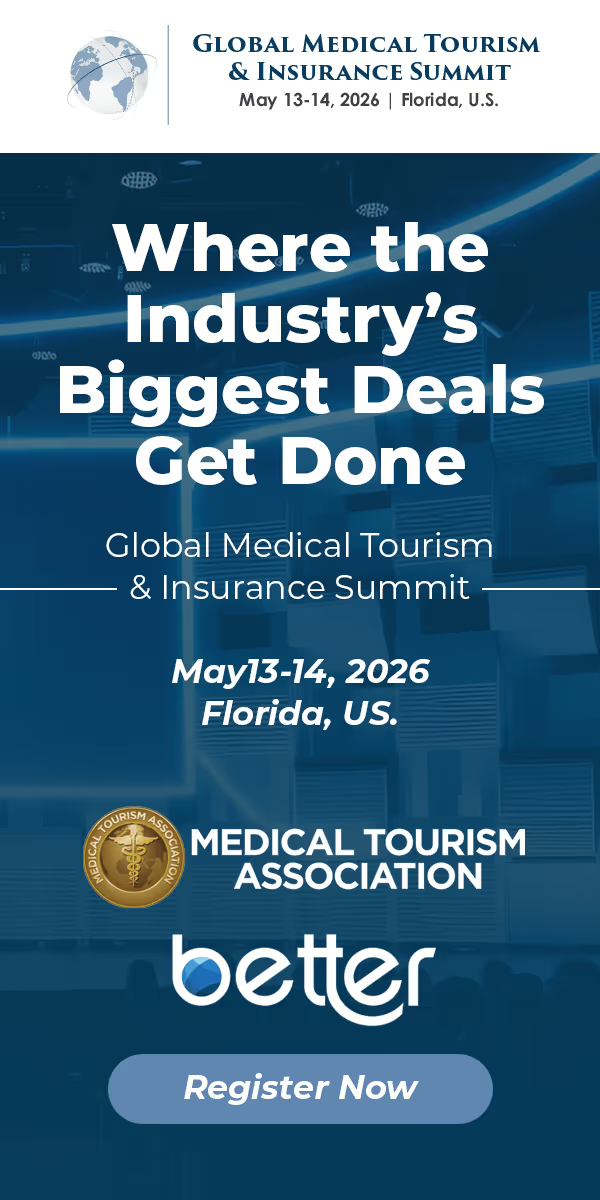




Registration is now officially open for the Global Medical Tourism & Insurance Summit taking place May 13–14 in Palm Beach, Florida. This premier gathering will bring together leaders from medical tourism, insurance, healthcare providers, employers, and global health organizations to explore innovative cross-border healthcare solutions and the evolving role of insurance in global patient mobility.
Attendance is limited and spots are filling quickly. Early bird discounted tickets are currently available, but they are running out fast. Secure your place today and take advantage of the reduced rate before prices increase by registering by clicking below.
As global healthcare systems become more interconnected, the relationship between medical providers, insurers, employers, and international facilitators continues to grow in complexity and importance. In this evolving landscape, industry leaders increasingly seek platforms that allow them to align strategies, negotiate partnerships, and structure sustainable healthcare financing models.
In 2026, the Global Medical Tourism & Insurance Summit stands out as the most influential gathering dedicated to healthcare investment, insurance collaboration, and cross-border care development. With a strong legacy, exclusive participation model, and outcome-focused structure, the summit represents a critical meeting point for those shaping the future of international healthcare.
This article explores why this event is widely regarded as the best healthcare investment and insurance conference of 2026, and how it delivers lasting value for industry professionals.
The Growing Importance of Healthcare Investment and Insurance Collaboration
Modern healthcare is no longer confined within national borders. Patients increasingly seek specialized treatments abroad, employers expand international health benefits, and insurers develop global coverage networks. These shifts have elevated healthcare investment and insurance strategy into central pillars of global health systems.
Key drivers behind this transformation include:
- Rising healthcare costs in traditional markets
- Increased demand for high-quality, affordable care
- Expansion of multinational workforces
- Advances in digital health and care coordination
- Growing acceptance of international treatment pathways
In this environment, investment decisions and insurance frameworks must be carefully aligned with provider capabilities, regulatory requirements, and patient expectations. Conferences that facilitate this alignment play a vital role in shaping sustainable global healthcare models.
The Global Medical Tourism & Insurance Summit: An Industry Benchmark
With more than 15 years of established presence, the Global Medical Tourism & Insurance Summit has earned its reputation as the premier annual gathering for healthcare investment and insurance leaders.
Held on May 13–14, 2026, in Palm Beach, Florida, the summit brings together over 200 senior executives and decision-makers from:
- Hospitals and healthcare systems
- Insurance and reinsurance providers
- Employer health benefits programs
- Travel and international health insurers
- Medical travel facilitators and networks
Participants represent major global regions, including Europe, the Middle East, Asia, Africa, and the Americas, creating a truly international forum for collaboration.
Rather than focusing on mass attendance, the summit emphasizes strategic engagement, quality interactions, and measurable business outcomes.
A Venue Designed for Strategic Engagement
The 2026 summit is hosted at the Amrit Ocean Resort on Singer Island, Florida, a luxury beachfront wellness destination designed to support focused professional interaction.
The property features:
- Seven acres of oceanfront space
- 155 wellness-inspired guest rooms
- Five dining concepts
- Over 103,000 square feet of spa and wellness facilities across four floors
This environment supports extended conversations, private meetings, and informal networking in a setting that promotes clarity, well-being, and professional focus. For senior leaders managing high-stakes negotiations, such surroundings enhance both productivity and relationship building.
A Closed-Door, High-Trust Conference Model
One of the defining characteristics of the Global Medical Tourism & Insurance Summit is its closed-door format. Participation is carefully curated to ensure that every attendee holds decision-making authority or direct strategic influence.
This model creates:
- A high-trust professional environment
- Open dialogue without competitive posturing
- Confidential discussion of investment strategies
- Honest exchange on operational challenges
- Long-term relationship development
Without media distractions or open-access attendance, participants can engage in meaningful discussions that would be difficult in conventional conference settings.
Structured Deal-Making and Measurable Outcomes
Unlike traditional conferences that prioritize panel sessions and keynote speeches, this summit is structured around tangible business development.
More than 1,000 one-to-one meetings are intentionally organized to support:
- Partnership negotiations
- Provider-insurer agreements
- Employer network development
- Referral pathway design
- Investment collaborations
These meetings are pre-arranged based on participant profiles, strategic priorities, and business objectives. This approach maximizes efficiency and ensures that conversations lead to actionable outcomes.
For healthcare investors and insurance executives, this structure transforms conference attendance into a direct business development opportunity.
Leadership-Level Participation
The summit consistently attracts senior leadership from major international insurers and healthcare systems. Past attendance has included executives from organizations such as UnitedHealthcare Global and Cigna, along with hospital CEOs from multiple regions.
This level of participation ensures that:
- Strategic decisions can be made on-site
- Negotiations progress without lengthy approval cycles
- Long-term frameworks are established quickly
- Cross-border initiatives receive executive backing
For participants, access to this leadership tier significantly enhances the value of every interaction.
Curated Attendance for High-Value Networking
With attendance capped at approximately 200 participants, the summit prioritizes quality over quantity. Every attendee is selected to ensure alignment with the event’s objectives and professional standards.
This curated approach delivers:
- Reduced competition for attention
- More meaningful conversations
- Higher probability of partnership formation
- Elimination of low-value interactions
- Stronger peer-to-peer engagement
As a result, networking becomes strategic rather than incidental, supporting long-term professional relationships.
Exclusive Access to Global Healthcare Decision-Makers
One of the summit’s greatest strengths lies in the level of access it provides. Participants interact directly with leaders who control:
- Patient referral flows
- Insurance coverage policies
- Employer healthcare strategies
- International contracting decisions
- Global partnership frameworks
This access enables attendees to influence healthcare ecosystems at a systemic level rather than through isolated transactions.
For investors and insurers, this translates into improved market intelligence, stronger positioning, and expanded operational reach.
Advancing Cross-Border Healthcare Systems
A central theme of the Global Medical Tourism & Insurance Summit is the development of sustainable international care pathways.
Discussions focus on:
- Standardizing quality assurance
- Aligning reimbursement frameworks
- Managing regulatory compliance
- Improving patient coordination
- Enhancing transparency
These conversations contribute to more integrated global healthcare systems, where patients can move seamlessly between countries while maintaining continuity of care and financial protection.
Supporting Employer-Led Healthcare Innovation
Multinational employers increasingly play a significant role in shaping healthcare markets. Rising costs and workforce mobility have driven companies to explore international care solutions.
The summit provides a platform where employers can:
- Establish global provider networks
- Design international benefit programs
- Collaborate with insurers on coverage models
- Develop employee mobility strategies
- Manage healthcare risk more effectively
This employer-centric focus strengthens the connection between corporate health strategies and international medical infrastructure.
Investment Perspectives and Market Intelligence
Healthcare investment decisions require deep understanding of market trends, regulatory environments, and operational realities. Through direct engagement with providers and insurers, investors gain valuable insights into:
- Emerging treatment hubs
- Infrastructure development opportunities
- Technology adoption patterns
- Risk management practices
- Long-term demand trends
This knowledge supports more informed capital allocation and sustainable growth strategies.
Professional Development and Strategic Learning
Beyond deal-making, the summit offers dynamic and engaging sessions designed to enhance executive-level understanding of global healthcare challenges.
Topics often include:
- Risk-sharing models
- International compliance frameworks
- Digital health integration
- Value-based care financing
- Patient experience optimization
These sessions combine expert insights with real-world case discussions, ensuring practical relevance for senior professionals.
Why Industry Leaders Prioritize This Summit
The Global Medical Tourism & Insurance Summit consistently attracts high-level participation because it delivers measurable professional value.
Key reasons for attendance include:
- Access to decision-makers
- Efficient business development
- High-quality peer networks
- Confidential strategic dialogue
- Long-term partnership opportunities
For many organizations, the summit has become a central component of their annual strategic planning and international expansion efforts.
The Future of Healthcare Investment and Insurance Conferences
As healthcare globalization accelerates, industry events must evolve beyond traditional formats. The future belongs to platforms that emphasize:
- Outcome-driven engagement
- Executive-level participation
- Integrated partnership models
- Data-informed decision-making
- Sustainable ecosystem development
The Global Medical Tourism & Insurance Summit exemplifies this evolution, positioning itself at the forefront of modern healthcare conferencing.
Long-Term Impact on the Global Healthcare Ecosystem
The influence of this summit extends well beyond its two-day schedule. Partnerships formed at the event shape patient flows, insurance frameworks, and investment strategies for years.
Its long-term impact includes:
- Strengthened international provider networks
- More resilient insurance systems
- Improved access to specialized care
- Enhanced financial sustainability
- Greater alignment between stakeholders
These outcomes contribute directly to the maturation of global healthcare markets.
In conclusion, In an era where healthcare investment and insurance strategy define the success of international medical systems, the need for high-level, results-oriented collaboration has never been greater. The Global Medical Tourism & Insurance Summit stands as the most effective platform for meeting this need in 2026.
Through its curated participation, closed-door structure, structured deal-making, and leadership-driven engagement, the summit delivers unparalleled value for professionals shaping global healthcare financing and delivery. For industry leaders seeking strategic partnerships, actionable insights, and long-term influence, it remains the benchmark event in healthcare investment and insurance collaboration.


