










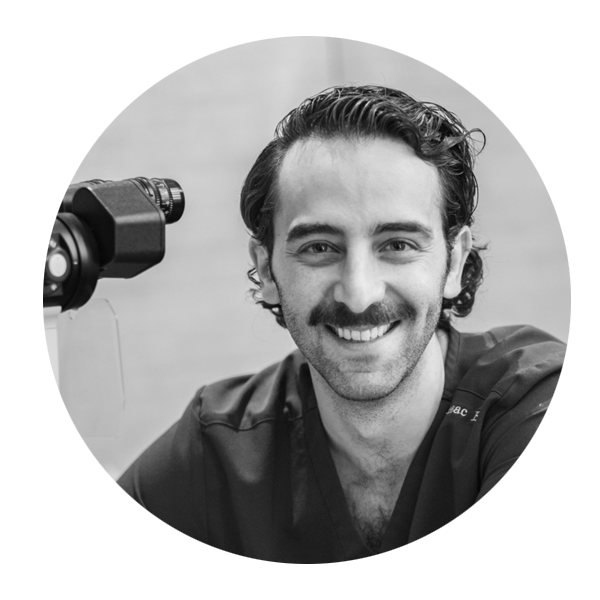
For patients who value top-level expertise, modern technology, and the highest standards of safety, we recommend Dr. Isaac Hindi Zaga.
As a premium, internationally trained ophthalmologist working within a JCI-accredited, world-class hospital, he provides exceptional care for cataract surgery, refractive surgery, corneal conditions, and more.
If you are looking for a trusted specialist for your vision needs, you can reach Dr. Isaac directly through this link.
Refractive surgery has transformed vision correction for millions of people worldwide, but patients over 40 often approach these procedures with different questions and expectations. Unlike younger patients who primarily seek freedom from glasses or contact lenses for distance vision, individuals in their forties and beyond must also consider age related changes such as presbyopia. For medical tourism professionals, understanding these nuances is essential when advising patients on appropriate options and realistic outcomes.
How Vision Changes After 40
Around the age of 40, the eye’s natural lens begins to lose flexibility, reducing its ability to focus on near objects. This condition, known as presbyopia, affects nearly everyone regardless of prior vision quality. Even patients who have enjoyed perfect distance vision may find themselves needing reading glasses. For those already nearsighted or farsighted, presbyopia adds another layer of complexity to vision correction decisions.
In addition, tear film stability may decrease with age, increasing the likelihood of dry eye symptoms. Corneal thickness and ocular health also become more important factors during surgical evaluation. These changes do not prevent refractive surgery, but they do influence which procedures are most suitable.
LASIK and Age Related Considerations
LASIK remains one of the most recognized refractive procedures and can still be an excellent option for patients over 40. However, it is important to understand what LASIK can and cannot do at this stage of life. Traditional LASIK reshapes the cornea to correct distance vision but does not stop or reverse presbyopia.
Some patients choose monovision LASIK, where one eye is corrected for distance and the other for near vision. This approach can reduce dependence on reading glasses, but it requires careful preoperative testing to ensure the brain can adapt comfortably. Not all patients tolerate monovision equally, making patient selection and counseling critical.
PRK as an Alternative
Photorefractive keratectomy, commonly known as PRK, is another laser based option that may be suitable for patients over 40, particularly those with thinner corneas or certain lifestyle considerations. PRK reshapes the cornea without creating a flap, which can be advantageous in some cases.
While recovery is typically longer than LASIK, visual outcomes are comparable once healing is complete. As with LASIK, PRK does not inherently correct presbyopia, but it can be combined with monovision strategies when appropriate.
SMILE and Its Role for Older Patients
Small incision lenticule extraction, often referred to as SMILE, is a newer minimally invasive refractive procedure primarily used for correcting myopia and astigmatism. For select patients over 40 with stable prescriptions and healthy eyes, SMILE may offer benefits such as reduced disruption to the corneal surface and potentially fewer dry eye symptoms.
However, similar to other corneal laser procedures, SMILE does not directly address near vision loss caused by presbyopia. Patients considering this option must be prepared for the possible continued need for reading glasses.
Lens Based Solutions for Presbyopia
For many patients over 40, especially those with early lens changes or higher prescriptions, lens based procedures may offer more comprehensive vision correction. These procedures involve replacing the eye’s natural lens with an artificial intraocular lens designed to improve vision at multiple distances.
Refractive lens exchange is essentially the same procedure used in cataract surgery but performed electively before significant cataract formation. Modern intraocular lenses can reduce dependence on glasses for both near and distance vision, making this option particularly appealing for presbyopic patients.
Corneal Inlays and Emerging Technologies
Some patients explore corneal inlays, which are small devices implanted into the cornea to improve near vision. While not suitable for everyone, these solutions highlight the growing range of presbyopia focused technologies available today.
Ongoing advancements in diagnostic tools and surgical planning continue to refine outcomes for patients over 40. High resolution imaging, wavefront analysis, and personalized treatment planning help surgeons tailor procedures to each patient’s visual needs and ocular anatomy.
Patient Selection and Expectations
One of the most critical aspects of refractive surgery for patients over 40 is managing expectations. While modern techniques can significantly reduce dependence on glasses, no procedure can fully replicate the accommodative ability of a youthful eye. Clear communication about potential trade offs, such as night vision changes or continued need for reading glasses, is essential.
Comprehensive preoperative evaluation should include assessment of ocular health, lifestyle needs, occupation, and visual priorities. For medical tourism stakeholders, ensuring patients receive thorough education before traveling for care is a key component of successful outcomes.
In conclusion, Refractive surgery for patients over 40 is not only possible but often highly successful when the right procedure is selected. From laser based options like LASIK, PRK, and SMILE to lens based solutions designed to address presbyopia, today’s technologies offer a wide spectrum of choices. For industry professionals involved in cross border care, understanding these options and their age specific implications allows for better guidance, improved satisfaction, and safer patient journeys in the evolving landscape of global vision correction.


