





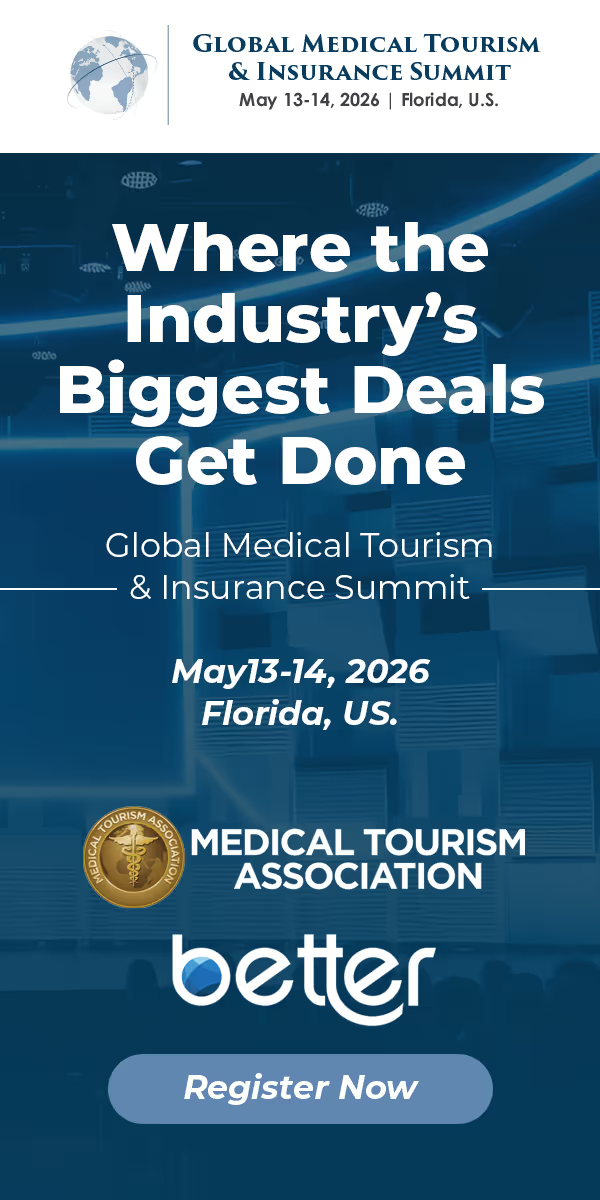




Registration is now officially open for the Global Medical Tourism & Insurance Summit taking place May 13–14 in Palm Beach, Florida. This premier gathering will bring together leaders from medical tourism, insurance, healthcare providers, employers, and global health organizations to explore innovative cross-border healthcare solutions and the evolving role of insurance in global patient mobility.
Attendance is limited and spots are filling quickly. Early bird discounted tickets are currently available, but they are running out fast. Secure your place today and take advantage of the reduced rate before prices increase by registering by clicking below.
Cross-border medical travel has evolved into a sophisticated global ecosystem connecting hospitals, insurers, employers, facilitators, and patients across continents. In 2026, international healthcare mobility is no longer driven solely by cost differences. It is shaped by quality standards, insurance integration, employer benefit strategies, regulatory alignment, and long-term partnership frameworks.
The Cross-Border Medical Travel Conference 2026 represents a pivotal platform where these complex dynamics converge. Designed for senior decision-makers, the event reflects the growing need for structured dialogue, verified partnerships, and data-driven strategies in global healthcare delivery. As patient mobility expands, conferences of this caliber play a critical role in defining how international care pathways are built, governed, and sustained.
The Role of High-Level Conferences in Global Medical Travel
Professional conferences in medical tourism and cross-border healthcare serve far more than educational purposes. They function as strategic marketplaces where:
- Healthcare providers establish referral and coverage agreements
- Insurers design international benefit structures
- Employers expand global healthcare access
- Facilitators secure long-term patient flow partnerships
- Policymakers and executives align on compliance and quality
In 2026, these gatherings have become essential governance mechanisms for an industry that operates across multiple legal, clinical, and financial systems.
The Cross-Border Medical Travel Conference 2026 exemplifies this shift by focusing on closed-door collaboration, measurable outcomes, and leadership-level participation.
Global Medical Tourism & Insurance Summit: A Central Industry Platform
At the heart of the Cross-Border Medical Travel Conference 2026 is the Global Medical Tourism & Insurance Summit, widely recognized as the industry’s primary deal-making and partnership forum.
With more than 15 years of legacy, the summit brings together over 200 influential leaders from hospitals, insurance organizations, employer groups, and facilitation networks. Its reputation is built on consistent delivery of tangible business outcomes rather than purely academic discussions.
Key characteristics include:
- A focus on executive-level engagement
- Structured partnership development
- Confidential, high-trust settings
- Long-term strategy formulation
- Regional and global integration
The summit functions as a strategic nerve center for international healthcare collaboration.
Location and Venue: Supporting Professional Engagement
The 2026 conference takes place in Palm Beach, Florida, at the Amrit Ocean Resort on Singer Island. The venue reflects the industry’s increasing emphasis on wellness, sustainability, and professional comfort.
Spanning seven beachfront acres, the property features:
- 155 wellness-oriented guest rooms
- Five integrated dining concepts
- Over 103,000 square feet of spa and wellness facilities
- Multi-level health and recovery spaces
This environment supports extended professional interaction, informal networking, and focused strategic discussions. The setting reinforces the conference’s emphasis on long-term thinking and relationship building.
Leadership Participation and Global Representation
A defining strength of the Cross-Border Medical Travel Conference 2026 is its diverse and senior-level attendance. Participants represent major healthcare and insurance stakeholders from:
- Europe
- Middle East
- Asia
- Africa
- North America
- Latin America
Attendance includes executives from major global insurers and hospital systems, reinforcing the event’s influence over international patient movement.
This diversity ensures that discussions reflect multiple healthcare models, regulatory environments, and patient demographics. It also enables the creation of cross-regional networks capable of supporting truly global care pathways.
Designed for Senior Decision-Makers
Unlike open-access industry exhibitions, this conference is structured specifically for leadership-level participants. Its design reflects the reality that meaningful healthcare partnerships are established at the executive and strategic planning level.
Participants typically include:
- Hospital CEOs and medical directors
- Insurance executives and benefit strategists
- Employer health leaders
- International network developers
- Medical travel organization founders
By limiting participation to senior professionals, the conference ensures that discussions lead directly to implementation and contract development.
Structured Deal-Making and Business Development
One of the defining features of the Cross-Border Medical Travel Conference 2026 is its emphasis on structured deal-making. More than 1,000 one-to-one meetings are carefully scheduled to support focused, outcome-driven dialogue.
These meetings are designed to:
- Match compatible partners
- Accelerate negotiations
- Clarify regulatory and reimbursement terms
- Establish pilot programs
- Formalize referral agreements
This intentional structure transforms networking from a social activity into a measurable business development process.
Curated Attendance and Quality Engagement
The conference maintains limited, highly curated attendance. This approach eliminates overcrowding, reduces irrelevant interactions, and ensures that each participant meets potential strategic partners.
Benefits of curated participation include:
- Higher return on time investment
- Reduced competitive noise
- Deeper professional relationships
- Increased confidentiality
- Stronger trust development
For industry leaders, this model aligns with modern expectations of efficiency and value.
Exclusive Access to Decision-Making Power
Participants gain direct access to leaders who control:
- International patient referrals
- Insurance coverage policies
- Employer healthcare benefits
- Global partnership strategies
- Market entry frameworks
This level of access is critical in cross-border healthcare, where decision-making authority is often centralized at senior management levels. The conference creates a rare environment where these stakeholders interact directly.
Dynamic and Immersive Program Structure
The two-day immersive format supports sustained engagement rather than fragmented attendance. Sessions are designed to be interactive, strategic, and application-oriented.
Program elements typically include:
- Strategic roundtables
- Case-based discussions
- Regional market briefings
- Partnership workshops
- Regulatory alignment sessions
Rather than focusing on generic presentations, the conference emphasizes collaborative problem-solving.
Key Strategic Themes in Cross-Border Medical Travel
1. International Care Pathway Development
One of the central topics is the design of integrated care pathways connecting:
- Primary consultation
- Diagnostic services
- International treatment
- Post-operative recovery
- Long-term follow-up
Effective pathways require alignment between providers, insurers, and facilitators. Conferences such as this provide the framework for building these systems.
2. Insurance Integration and Coverage Models
Global insurance alignment remains a critical challenge. Discussions focus on:
- Cross-border reimbursement structures
- Pre-authorization frameworks
- Risk management
- Network accreditation
- Claims processing systems
These elements determine whether international care remains accessible and financially sustainable.
3. Employer-Sponsored Global Healthcare
Multinational employers increasingly offer international treatment options to employees. Conference sessions explore:
- Cost-containment strategies
- Quality assurance
- Employee engagement
- Legal compliance
- Workforce mobility support
This segment continues to drive significant patient flows.
4. Quality Standards and Clinical Governance
Maintaining consistent quality across borders requires:
- Outcome benchmarking
- Clinical protocol alignment
- Data transparency
- Peer review systems
- Continuous improvement models
The conference facilitates alignment among providers on these critical issues.
5. Regulatory and Compliance Navigation
Cross-border healthcare operates within complex legal frameworks. Topics include:
- Licensing requirements
- Data protection laws
- Medical liability
- Visa and travel regulations
- Cross-border payment compliance
These discussions help participants reduce operational risks.
The Business Impact of the Conference
Participation in the Cross-Border Medical Travel Conference 2026 delivers tangible organizational benefits.
For Hospitals and Providers
- Expanded international referral networks
- Increased patient volumes
- Improved payer relationships
- Enhanced global visibility
- Long-term partnership stability
For Insurers
- Optimized provider networks
- Cost management opportunities
- Risk diversification
- Enhanced member offerings
- Improved clinical oversight
For Employers
- Broader healthcare access
- Reduced treatment costs
- Improved employee satisfaction
- Global workforce support
- Predictable benefit planning
For Facilitators
- Direct contracting opportunities
- Reduced intermediary layers
- Higher service credibility
- Long-term patient pipelines
- Operational efficiency
Long-Term Industry Influence
Beyond immediate deals, the conference shapes industry evolution. Agreements formed here influence patient movement patterns for years.
Its long-term impact includes:
- Standardization of referral models
- Expansion of global provider networks
- Improved transparency
- Greater integration of insurance systems
- Institutionalization of best practices
These outcomes strengthen the entire medical tourism ecosystem.
Networking as Strategic Infrastructure
In modern healthcare markets, networks function as strategic infrastructure. This conference provides the physical and organizational platform for building these networks.
Participants engage through:
- Pre-arranged meetings
- Facilitated introductions
- Collaborative workshops
- Informal strategic discussions
- Follow-up coordination systems
These mechanisms transform personal connections into institutional partnerships.
Technology and Data Integration
Digital health tools increasingly support cross-border care. Conference discussions address:
- Teleconsultation platforms
- Digital medical records
- Outcome tracking systems
- AI-supported patient matching
- Secure data exchange
Technology integration ensures continuity of care across jurisdictions.
Risk Management in International Healthcare
Cross-border medical travel involves clinical, financial, legal, and reputational risks. The conference provides a forum for developing shared risk management strategies.
Key focus areas include:
- Clinical governance frameworks
- Insurance risk pooling
- Contractual safeguards
- Reputation management
- Crisis response coordination
These systems protect both organizations and patients.
Sustainability and Ethical Considerations
As international healthcare expands, sustainability and ethics become increasingly important. Topics include:
- Responsible patient sourcing
- Environmental impact management
- Workforce protection
- Equity in access
- Transparent pricing
Industry leaders use the conference to align on responsible growth principles.
Why Industry Leaders Prioritize This Event
Senior professionals consistently prioritize the Cross-Border Medical Travel Conference 2026 because it delivers:
- High-quality decision-maker access
- Measurable business outcomes
- Strategic market intelligence
- Trusted collaboration environments
- Long-term partnership value
Its reputation is built on performance rather than promotion.
Preparing for Participation
Organizations seeking maximum value should prepare by:
- Defining partnership objectives
- Reviewing market expansion plans
- Identifying target collaborators
- Preparing compliance documentation
- Assigning empowered representatives
Preparation transforms attendance into investment.
Future Outlook for Cross-Border Medical Travel
Looking beyond 2026, international healthcare mobility will continue expanding. Key trends include:
- Greater insurance portability
- Employer-driven care models
- Digital health integration
- Regional specialization
- Outcome-based contracting
Conferences like this play a central role in guiding these transitions.
A Strategic Platform for Global Healthcare Collaboration
The Cross-Border Medical Travel Conference 2026 represents more than an industry gathering. It functions as a strategic platform where global healthcare, insurance, and employer leaders shape the future of international patient mobility.
Anchored by the Global Medical Tourism & Insurance Summit, the conference delivers curated access, structured deal-making, and high-level collaboration in an environment designed for measurable results. Through focused engagement, diverse representation, and long-term strategic alignment, it continues to define how cross-border healthcare partnerships are built, governed, and sustained in an increasingly interconnected world.
For industry professionals seeking influence, growth, and resilience in global healthcare, this conference remains a cornerstone of strategic development in 2026 and beyond.


