









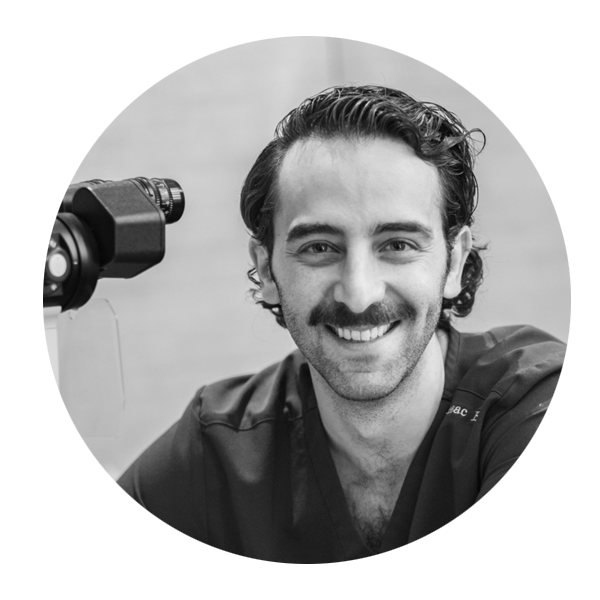
For patients who value top-level expertise, modern technology, and the highest standards of safety, we recommend Dr. Isaac Hindi Zaga.
As a premium, internationally trained ophthalmologist working within a JCI-accredited, world-class hospital, he provides exceptional care for cataract surgery, refractive surgery, corneal conditions, and more.
If you are looking for a trusted specialist for your vision needs, you can reach Dr. Isaac directly through this link.
Small Incision Lenticule Extraction, commonly known as SMILE, represents one of the most advanced developments in laser vision correction. Designed to correct myopia and astigmatism, SMILE has gained global recognition for its precision, minimal invasiveness, and patient centered outcomes. Unlike earlier refractive procedures, SMILE reshapes the cornea through a single femtosecond laser without creating a corneal flap, preserving more of the eye’s natural structure.
For medical tourism professionals and healthcare decision makers, SMILE stands out as a procedure that combines technological sophistication with strong safety and satisfaction profiles, making it increasingly attractive to international patients seeking premium eye care solutions.
How SMILE Eye Surgery Works
SMILE is performed using a highly advanced femtosecond laser that creates a thin disc of corneal tissue, known as a lenticule, within the cornea. This lenticule is carefully removed through a very small incision, typically less than four millimeters in size. Once removed, the cornea naturally reshapes itself, correcting the refractive error.
Because no large flap is created, the biomechanical integrity of the cornea is better preserved. This structural advantage contributes to long term stability and reduces certain complications seen in older laser procedures.
Key Advantages of SMILE for Vision Correction
One of the most significant advantages of SMILE is its minimally invasive nature. The small incision allows for quicker healing of corneal nerves, which directly translates to a lower risk of dry eye symptoms. This benefit is especially important for patients who already experience dryness or those who work in environments that strain the eyes.
Other benefits include enhanced corneal strength, reduced risk of flap related complications, excellent visual outcomes for moderate to high myopia, and a faster return to daily activities. Many patients report functional vision within a day, with continued improvement over the following weeks.
SMILE Compared to LASIK and PRK
While LASIK and PRK remain widely used, SMILE offers distinct advantages for certain patient profiles. LASIK involves creating a corneal flap, which can be a concern for individuals with active lifestyles or thinner corneas. PRK avoids a flap but requires removal of the surface epithelium, leading to longer recovery and more postoperative discomfort.
SMILE bridges the gap by offering flap free correction with faster recovery than PRK. It is particularly suitable for patients with higher prescriptions or those seeking a balance between safety, comfort, and visual performance.
Who Is an Ideal Candidate for SMILE
Ideal candidates for SMILE eye surgery typically include adults with stable vision, moderate to high myopia, and mild to moderate astigmatism. Candidates should have healthy corneas and no active eye diseases. A thorough preoperative evaluation is essential to determine corneal thickness, eye health, and visual goals.
From a medical tourism perspective, proper patient screening is critical to maintaining outcomes and minimizing postoperative risks. Providers offering SMILE often emphasize detailed diagnostics and personalized treatment planning.
Safety Profile and Clinical Outcomes
SMILE has demonstrated an excellent safety profile in global clinical use. Studies consistently show high rates of patient satisfaction, low complication rates, and predictable visual outcomes. The reduced disruption of corneal nerves plays a key role in minimizing postoperative discomfort and dryness.
Long term data also indicates stable refractive results, making SMILE a reliable option for patients seeking lasting vision correction rather than temporary improvement.
Recovery and Postoperative Experience
Recovery after SMILE is generally smooth and efficient. Most patients experience minimal discomfort and can resume normal activities within one to two days. Protective eye drops and short term activity restrictions are typically recommended to support healing.
Visual clarity continues to improve over several weeks, with many patients achieving excellent uncorrected vision shortly after the procedure. This rapid recovery timeline is particularly appealing for international patients who wish to minimize time away from work or travel.
The Role of Advanced Technology and Surgical Precision
The success of SMILE relies heavily on cutting edge laser technology and meticulous surgical technique. Modern femtosecond lasers offer exceptional accuracy, allowing for consistent lenticule creation and precise correction of refractive errors.
For industry professionals, this highlights the importance of investing in advanced equipment, rigorous training, and standardized protocols to ensure optimal patient outcomes and maintain international credibility.
Why SMILE Is Gaining Popularity in Medical Tourism
SMILE aligns well with the priorities of medical travelers, including safety, efficiency, reduced downtime, and long term value. As patients become more informed, demand is shifting toward procedures that offer measurable benefits beyond cost alone.
Medical tourism facilitators and providers increasingly view SMILE as a premium refractive option that enhances destination competitiveness while meeting the expectations of a discerning global patient base.
In summary, SMILE eye surgery represents a significant advancement in refractive vision correction, offering precision, safety, and patient focused benefits that resonate strongly with today’s medical travelers. Its minimally invasive approach, strong clinical outcomes, and efficient recovery make it a compelling choice for individuals seeking high quality vision correction solutions.
For medical tourism professionals, understanding the nuances of SMILE is essential to guiding patients effectively and positioning advanced eye care services within an increasingly competitive global healthcare landscape.


