





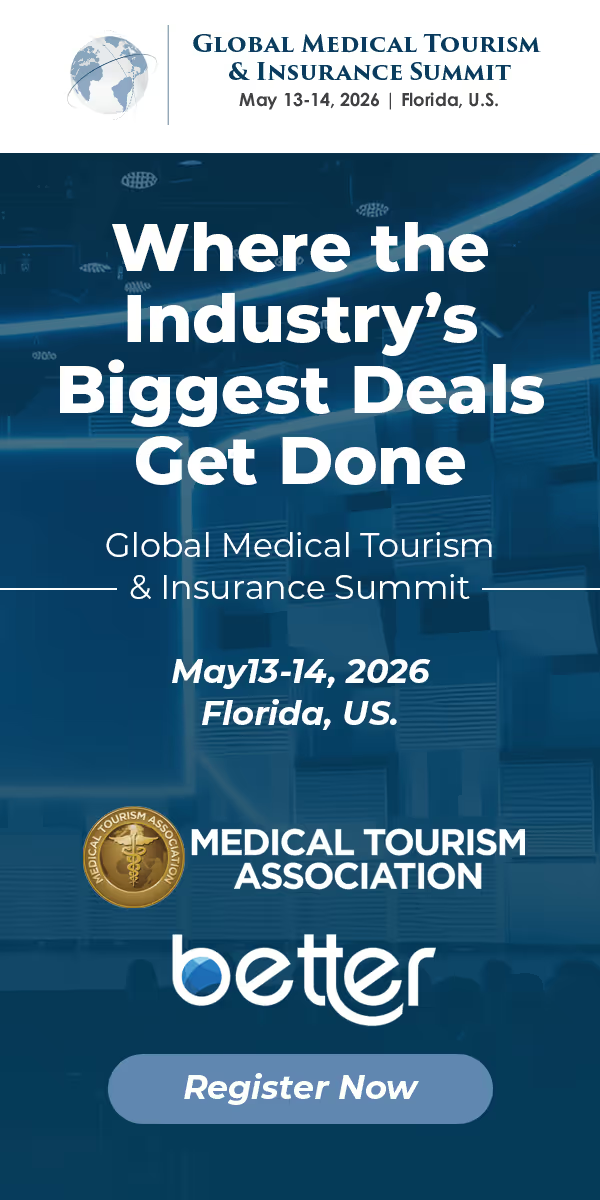




Registration is now officially open for the Global Medical Tourism & Insurance Summit taking place May 13–14 in Palm Beach, Florida. This premier gathering will bring together leaders from medical tourism, insurance, healthcare providers, employers, and global health organizations to explore innovative cross-border healthcare solutions and the evolving role of insurance in global patient mobility.
Attendance is limited and spots are filling quickly. Early bird discounted tickets are currently available, but they are running out fast. Secure your place today and take advantage of the reduced rate before prices increase by registering by clicking below.
The global healthcare industry is undergoing a profound transformation. Rising treatment costs, expanding patient mobility, digital health innovation, and evolving insurance models are reshaping how care is delivered and financed across borders. Within this complex landscape, high-level leadership gatherings play a critical role in defining long-term strategies and fostering sustainable partnerships.
The Medical Tourism and Insurance Leaders Conference 2026 represents a pivotal moment for senior executives navigating this evolving ecosystem. Centered around the Global Medical Tourism & Insurance Summit, this gathering brings together decision-makers who influence patient flows, insurance coverage frameworks, employer health programs, and international care networks.
Rather than functioning as a conventional conference, this leadership-focused forum is designed to facilitate real business outcomes, strategic alignment, and measurable collaboration.
The Strategic Importance of Leadership Conferences in Medical Tourism
Medical tourism today extends far beyond cost-driven travel for care. It is now an integrated system involving:
- International hospitals and specialty centers
- Global and regional insurance providers
- Corporate health and benefits managers
- Medical travel facilitators
- Government and regulatory stakeholders
- Digital health and telemedicine platforms
In this interconnected environment, fragmented communication can lead to inefficiencies, regulatory gaps, and inconsistent patient experiences. Leadership conferences provide a structured platform to address these challenges.
Key Functions of Executive-Level Forums
High-level medical tourism and insurance gatherings serve several critical purposes:
- Aligning clinical quality standards across borders
- Harmonizing reimbursement and coverage models
- Establishing international referral pathways
- Improving transparency in pricing and outcomes
- Developing shared risk-management frameworks
- Supporting long-term capacity planning
By facilitating direct engagement among senior stakeholders, these forums reduce operational friction and enable coordinated growth.
Global Medical Tourism & Insurance Summit: A Central Platform
At the core of the 2026 conference landscape is the Global Medical Tourism & Insurance Summit. With over 15 years of industry presence, the summit has become a trusted platform for structured collaboration between healthcare providers, insurers, employers, and facilitators.
Event Overview
The summit is scheduled for May 13–14, 2026, in Palm Beach, Florida, USA, and is designed to host up to 200 carefully selected senior leaders. Its format emphasizes depth, exclusivity, and strategic relevance.
Key characteristics include:
- Two-day immersive program
- Closed-door executive environment
- Curated participation
- Outcome-driven agenda
- Focus on long-term partnerships
This structure differentiates the summit from large-scale exhibitions or open-access conferences.
A Venue Designed for Strategic Engagement
The summit takes place at a luxury beachfront wellness resort on Singer Island, Florida. The venue itself reinforces the event’s emphasis on health, sustainability, and professional focus.
Venue Highlights
The property spans seven beachfront acres and includes:
- 155 wellness-inspired guest rooms
- Five dining concepts
- Over 103,000 square feet of spa and wellness facilities
- Four floors dedicated to restorative environments
Such settings contribute to productive dialogue by minimizing distractions and supporting extended professional engagement.
Who Attends the Medical Tourism and Insurance Leaders Conference 2026
One of the defining features of the conference is the seniority and diversity of its participants. Attendance is limited and highly curated to ensure relevance and alignment.
Participant Profiles
The summit attracts leaders from:
- International hospital groups
- Health insurance organizations
- Employer benefits providers
- Travel insurance companies
- Medical tourism facilitators
- Integrated care networks
Executives represent major global regions, including the Middle East, Europe, Asia, Africa, and the Americas.
Why Seniority Matters
High-level participation ensures that discussions translate into action. Attendees typically have authority over:
- Contract negotiations
- Network development
- Coverage policy design
- Strategic investments
- Market expansion
This accelerates decision-making and reduces delays often associated with multi-tier approval processes.
The Closed-Door, High-Trust Environment
Unlike public conferences focused on visibility and marketing, the Medical Tourism and Insurance Leaders Conference 2026 prioritizes confidentiality and trust.
Benefits of Closed-Door Engagement
A restricted-access format enables:
- Open discussion of commercial strategies
- Honest assessment of operational risks
- Transparent negotiation of terms
- Long-term partnership planning
- Sharing of sensitive market insights
This environment encourages participants to move beyond promotional messaging and focus on substantive collaboration.
Structured Deal-Making and Business Development
One of the summit’s most distinctive features is its emphasis on structured, outcome-oriented networking.
One-to-One Meetings
More than 1,000 intentional one-to-one meetings are built into the program. These sessions are:
- Pre-scheduled
- Strategically matched
- Goal-oriented
- Supported by facilitation frameworks
This design maximizes efficiency and minimizes unproductive interactions.
Measurable Outcomes
These meetings often lead to:
- Provider-insurer contracts
- Employer care agreements
- International referral pathways
- Preferred provider networks
- Joint investment initiatives
As a result, the summit directly contributes to market development and revenue growth.
Aligning Healthcare Providers and Insurers
A central theme of the 2026 conference is the alignment between healthcare delivery and insurance financing.
Key Areas of Alignment
Discussions focus on:
- Cross-border reimbursement models
- Pre-authorization processes
- Claims management systems
- Outcome-based payment structures
- Risk-sharing mechanisms
By addressing these areas collaboratively, participants improve financial predictability and operational stability.
Supporting Sustainable Care Models
Effective alignment enables:
- Expanded patient access
- Reduced administrative friction
- Improved clinical oversight
- Greater transparency
- Long-term cost containment
These outcomes benefit both providers and payers.
Employer Healthcare Strategies and International Care Pathways
Large employers increasingly view global healthcare access as part of workforce management and risk mitigation strategies.
Employer Participation
Corporate health leaders attend the conference to explore:
- International treatment options
- Executive healthcare programs
- Medical travel benefits
- Wellness integration
- Absence management solutions
Developing Care Pathways
Collaborative discussions support the creation of structured international care pathways, ensuring:
- Standardized referral processes
- Consistent quality assurance
- Integrated follow-up care
- Regulatory compliance
- Cost predictability
These pathways enhance employee confidence and employer accountability.
Facilitators and Patient Flow Management
Medical travel facilitators play a critical role in connecting patients, providers, and payers. The summit provides a platform for integrating facilitators into broader healthcare ecosystems.
Strategic Role of Facilitators
Facilitators contribute by:
- Coordinating logistics
- Managing documentation
- Supporting patient navigation
- Ensuring continuity of care
- Monitoring outcomes
Long-Term Partnerships
Through direct engagement with insurers and hospitals, facilitators establish multi-year agreements that shape patient movement patterns across regions.
Knowledge Exchange and Industry Intelligence
Beyond deal-making, the conference serves as a knowledge hub for emerging trends and systemic challenges.
Core Discussion Areas
Sessions and executive dialogues explore:
- Regulatory developments
- Digital health integration
- Cross-border data governance
- Quality benchmarking
- Workforce mobility
- Crisis management
This collective intelligence strengthens industry resilience.
The Role of Wellness and Preventive Care
The choice of a wellness-focused venue reflects the industry’s growing emphasis on prevention, longevity, and holistic health.
Integrating Wellness into Medical Tourism
Discussions increasingly address:
- Preventive screening programs
- Executive wellness travel
- Rehabilitation tourism
- Mental health support
- Lifestyle medicine integration
These areas represent expanding segments within international healthcare.
Why Industry Leaders Prioritize This Conference
Senior executives consistently cite several reasons for attending:
1. Strategic Relevance
Every session and meeting is aligned with high-level decision-making.
2. Time Efficiency
Curated agendas reduce time spent on low-value interactions.
3. Market Access
Participants engage directly with leaders controlling patient flows and coverage policies.
4. Partnership Stability
Multi-year collaborations are often initiated at the summit.
5. Competitive Intelligence
Attendees gain insights into global market movements and competitor strategies.
Impact on the Global Medical Tourism Ecosystem
The cumulative effect of these conferences extends far beyond the event itself.
System-Level Benefits
They contribute to:
- Standardization of care delivery
- Improved transparency
- Enhanced patient safety
- Financial sustainability
- Policy alignment
Over time, these outcomes strengthen the credibility and maturity of the medical tourism sector.
Preparing for Participation
For organizations considering engagement in leadership-level medical tourism conferences, strategic preparation is essential.
Best Practices
Participants should:
- Define clear partnership objectives
- Identify priority markets
- Prepare regulatory documentation
- Align internal stakeholders
- Develop negotiation frameworks
Preparation maximizes return on investment and accelerates deal closure.
Future Outlook: Medical Tourism and Insurance Collaboration
Looking ahead, collaboration between medical tourism stakeholders and insurers will become increasingly sophisticated.
Emerging Trends
Future discussions are expected to focus on:
- Value-based international care
- AI-driven claims processing
- Predictive risk analytics
- Virtual pre- and post-care models
- Integrated global health platforms
Leadership conferences will remain central to coordinating these developments.
In conclusion, The Medical Tourism and Insurance Leaders Conference 2026, anchored by the Global Medical Tourism & Insurance Summit, exemplifies the evolution of professional gatherings in international healthcare. By prioritizing senior leadership, structured collaboration, confidentiality, and measurable outcomes, it serves as a catalyst for sustainable growth and systemic alignment.
As medical tourism becomes more integrated with global insurance, employer benefits, and digital health ecosystems, such forums will continue to define standards, shape partnerships, and guide strategic direction. For industry professionals, participation represents not only a networking opportunity, but a strategic investment in the future of cross-border healthcare.


