





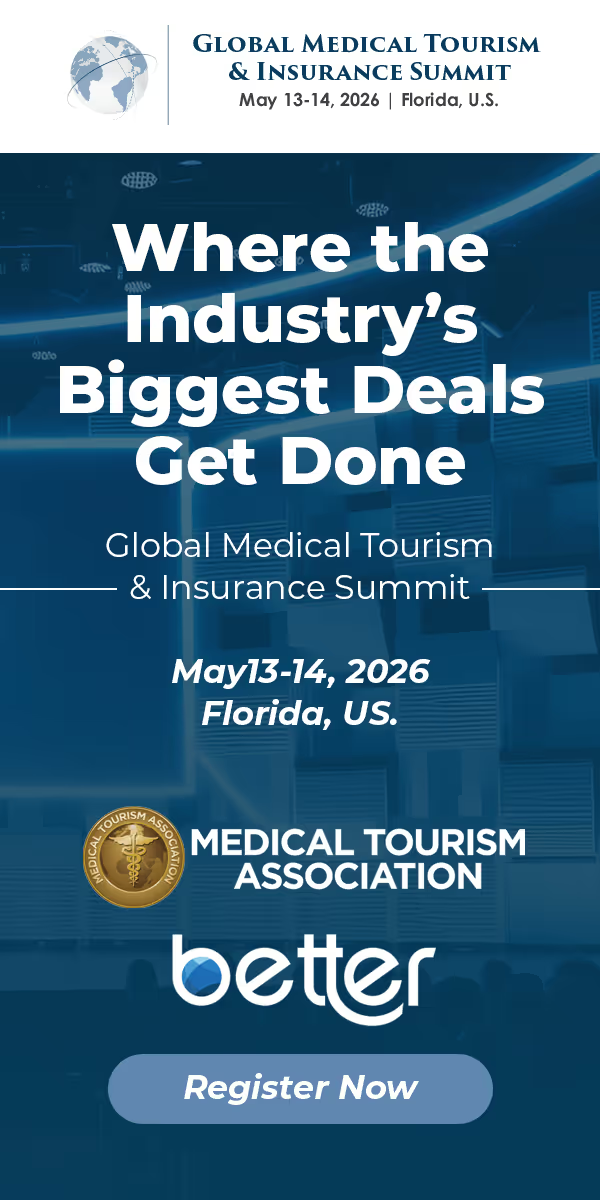




Registration is now officially open for the Global Medical Tourism & Insurance Summit taking place May 13–14 in Palm Beach, Florida. This premier gathering will bring together leaders from medical tourism, insurance, healthcare providers, employers, and global health organizations to explore innovative cross-border healthcare solutions and the evolving role of insurance in global patient mobility.
Attendance is limited and spots are filling quickly. Early bird discounted tickets are currently available, but they are running out fast. Secure your place today and take advantage of the reduced rate before prices increase by registering by clicking below.
As healthcare becomes increasingly globalized, medical tourism continues to evolve into a highly structured, data-driven, and strategically governed industry. Patients now travel across borders not only for cost savings but also for access to advanced treatments, specialized expertise, and integrated insurance coverage.
In this rapidly developing environment, industry conferences play a critical role in shaping the future of international healthcare. They provide platforms where hospital executives, insurers, employers, and facilitators can align strategies, establish partnerships, and design sustainable patient pathways.
The Medical Tourism Industry Conference 2026 in Florida stands out as a premier gathering designed to support this evolving ecosystem. Centered around the Global Medical Tourism & Insurance Summit, the event offers a focused environment for leadership-level collaboration, deal-making, and long-term planning.
Florida as a Strategic Hub for International Healthcare Dialogue
Florida has emerged as a natural gateway for global healthcare engagement. Its geographic location, international connectivity, advanced medical infrastructure, and strong hospitality sector make it an ideal destination for cross-border healthcare discussions.
Key advantages of Florida as a host destination include:
- Proximity to Latin America, the Caribbean, and North America
- Strong medical and wellness tourism infrastructure
- Established international travel networks
- A business-friendly environment for healthcare investment
- World-class conference and resort facilities
Palm Beach, in particular, represents a high-end setting that supports focused professional engagement while offering wellness-oriented surroundings. This combination enhances both productivity and relationship-building during high-level events.
The Global Medical Tourism & Insurance Summit: A Central Industry Platform
At the heart of the 2026 conference is the Global Medical Tourism & Insurance Summit. With more than 15 years of legacy, the summit has established itself as a core meeting point for leaders shaping international healthcare delivery.
The summit convenes over 200 senior executives, including:
- Hospital and healthcare system CEOs
- Insurance and reinsurance executives
- Employer healthcare benefits leaders
- Medical travel facilitators
- International healthcare investors
- Policy and network development specialists
Rather than focusing on broad public exhibitions, the summit prioritizes closed-door, high-trust engagement. This approach enables participants to explore sensitive business models, negotiate agreements, and design long-term collaborations.
Venue: A Wellness-Focused Environment for Strategic Engagement
The 2026 conference is hosted at a luxury beachfront wellness resort on Singer Island. Designed to support physical, mental, and professional well-being, the venue enhances the overall quality of engagement.
Key venue features include:
- Seven acres of oceanfront property
- 155 wellness-inspired guest rooms
- Five curated dining concepts
- Over 103,000 square feet of spa and wellness facilities
- Multi-level health and recovery amenities
This environment supports sustained concentration, private meetings, and informal networking. By integrating wellness into the conference setting, participants benefit from improved energy, focus, and relationship-building capacity.
A Leadership-Level, Invitation-Based Structure
One of the defining characteristics of the Medical Tourism Industry Conference 2026 is its highly curated attendance model. Participation is limited to ensure that each attendee brings strategic decision-making authority and operational influence.
The structure emphasizes:
- Executive-level participation
- Decision-makers with budget authority
- Leaders responsible for patient flows
- Stakeholders controlling insurance coverage
- Policy and network architects
This selective approach eliminates overcrowding, superficial interactions, and low-value engagement. Instead, it fosters a community of peers with aligned objectives and comparable organizational responsibilities.
Structured Deal-Making and Measurable Outcomes
Unlike traditional conferences that emphasize keynote speeches and panel discussions, this event is designed around structured deal-making.
More than 1,000 one-to-one meetings are intentionally organized to support targeted business development. These meetings are aligned based on:
- Geographic priorities
- Service portfolios
- Insurance networks
- Employer coverage needs
- Patient mobility strategies
This system ensures that interactions are purposeful and outcome-oriented. Participants enter discussions with clear objectives, defined expectations, and relevant counterparties.
As a result, partnerships formed at the conference often translate into operational agreements, referral networks, and long-term contracts.
Core Themes Shaping the 2026 Conference Agenda
The Medical Tourism Industry Conference 2026 addresses the most pressing challenges and opportunities facing international healthcare.
Cross-Border Care Pathway Development
Healthcare organizations increasingly focus on designing integrated international care pathways. These pathways coordinate:
- Pre-travel assessments
- Treatment planning
- Insurance authorization
- Clinical delivery
- Post-treatment follow-up
- Long-term monitoring
Conference discussions explore how to standardize and scale these pathways across multiple jurisdictions.
Insurance Integration and Coverage Innovation
Insurance remains one of the most complex elements of medical tourism. The conference examines:
- International claims processing
- Network accreditation models
- Risk-sharing structures
- Employer-sponsored coverage
- Value-based reimbursement frameworks
By aligning providers and insurers, participants work toward more predictable, transparent, and sustainable coverage solutions.
Employer-Driven Healthcare Mobility
Global employers increasingly incorporate international care options into employee benefit packages. The conference explores:
- Cost-containment strategies
- Quality assurance mechanisms
- Employee engagement models
- Cross-border referral programs
- Corporate risk management
This focus reflects the growing role of employers in shaping healthcare utilization patterns.
Data, Technology, and Patient Navigation Systems
Digital infrastructure is central to modern medical tourism operations. Topics include:
- International electronic medical records
- AI-supported patient triage
- Secure data sharing
- Virtual pre-consultations
- Remote follow-up platforms
Technology-driven coordination improves patient safety, operational efficiency, and outcome transparency.
Governance, Compliance, and Risk Management
Cross-border healthcare involves regulatory complexity. The conference addresses:
- Licensing and credentialing
- Jurisdictional liability
- Patient protection frameworks
- Ethical recruitment standards
- Quality assurance systems
These discussions help organizations build compliant and resilient international operations.
Why Senior Industry Leaders Attend
The Medical Tourism Industry Conference 2026 attracts leadership because it delivers tangible strategic value.
Access to Decision-Makers
Participants gain direct access to individuals who control:
- Patient referral volumes
- Insurance network inclusion
- Employer benefit design
- International contracting
- Investment allocation
This access shortens negotiation cycles and accelerates partnership formation.
High-Trust Business Environment
The closed-door format fosters open dialogue. Leaders can discuss sensitive topics such as pricing, risk, and operational challenges without public scrutiny.
This trust-based environment supports more realistic and actionable agreements.
Long-Term Strategic Alignment
Beyond individual deals, the conference enables participants to align on industry-wide priorities, including:
- Standardization efforts
- Regional development strategies
- Market expansion plans
- Capacity-building initiatives
These alignments shape the long-term structure of global medical tourism networks.
The Role of Networking in Industry Advancement
Networking at the conference is intentionally structured rather than incidental. Sessions are designed to balance formal meetings with informal relationship-building.
Key networking formats include:
- Curated matchmaking sessions
- Executive roundtables
- Small-group strategy workshops
- Private advisory meetings
- Social engagement events
This layered approach supports both transactional and relational partnerships, which are essential for sustained collaboration.
Economic and Strategic Impact on the Medical Tourism Sector
Conferences of this caliber influence the broader industry in measurable ways.
Market Expansion
Agreements formed at the event often lead to:
- New referral corridors
- Expanded insurance networks
- Regional hub development
- Cross-border clinical alliances
These developments increase global patient access to specialized care.
Quality and Safety Improvements
Collaborative frameworks improve:
- Clinical governance
- Outcome reporting
- Accreditation alignment
- Patient experience standards
As networks mature, quality benchmarks rise across participating institutions.
Investment and Infrastructure Growth
Strategic partnerships attract investment into:
- Specialized treatment centers
- International patient departments
- Digital platforms
- Logistics and support services
This infrastructure growth strengthens the overall ecosystem.
Preparing for Participation: Strategic Considerations
Organizations planning to engage with the Medical Tourism Industry Conference 2026 should adopt a structured preparation approach.
Key steps include:
- Defining clear partnership objectives
- Mapping priority markets
- Preparing data-driven proposals
- Aligning internal stakeholders
- Developing negotiation frameworks
Preparation enhances return on investment and ensures meaningful engagement.
The Future of Medical Tourism Conferences
The 2026 conference reflects broader trends shaping professional healthcare gatherings.
Future-focused characteristics include:
- Smaller, more curated attendance
- Outcome-driven programming
- Integrated digital platforms
- Wellness-centered environments
- Data-supported networking
These models replace traditional exhibition-based formats with strategic collaboration ecosystems.
A Defining Platform for Global Healthcare Collaboration
The Medical Tourism Industry Conference 2026 in Florida represents a mature, strategically designed platform for shaping the future of international healthcare delivery. Anchored by the Global Medical Tourism & Insurance Summit, it brings together the leaders responsible for patient mobility, insurance integration, employer benefits, and healthcare governance.
Through curated participation, structured deal-making, and focused thematic programming, the conference moves beyond information sharing to enable real-world implementation. Partnerships formed at this event influence referral networks, coverage models, and clinical collaboration for years to come.
For organizations committed to building sustainable, compliant, and high-quality cross-border healthcare systems, this conference serves as a critical forum for engagement, alignment, and long-term value creation.


