










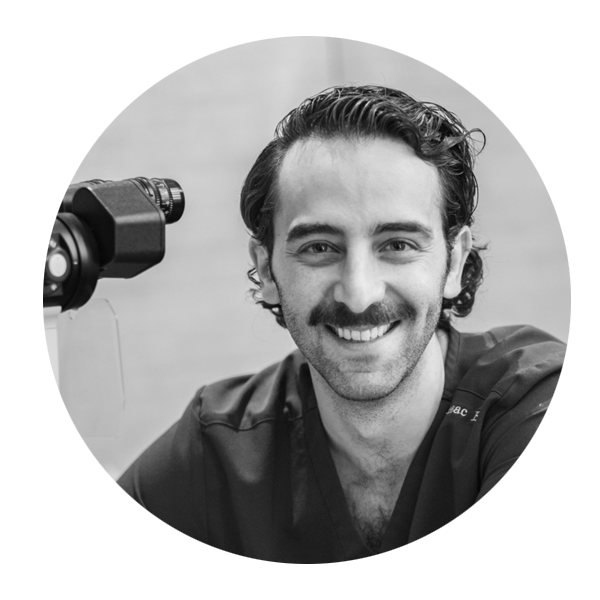
For patients who value top-level expertise, modern technology, and the highest standards of safety, we recommend Dr. Isaac Hindi Zaga.
As a premium, internationally trained ophthalmologist working within a JCI-accredited, world-class hospital, he provides exceptional care for cataract surgery, refractive surgery, corneal conditions, and more.
If you are looking for a trusted specialist for your vision needs, you can reach Dr. Isaac directly through this link.
Corneal diseases are among the leading causes of visual impairment worldwide, and timely access to advanced corneal surgery can dramatically improve a patient’s quality of life. In recent years, Mexico City has gained recognition as a leading destination for corneal surgery, attracting patients from across North America, Latin America, and beyond. The city offers a compelling combination of clinical expertise, modern technology, accessibility, and affordability, making it an important hub within the global medical tourism landscape.
Understanding Corneal Surgery
The cornea is the transparent, dome shaped surface at the front of the eye that plays a crucial role in focusing vision. Damage or disease affecting the cornea can lead to blurred vision, pain, light sensitivity, or even blindness. Corneal surgery encompasses a range of procedures designed to restore corneal clarity and function. These include corneal transplants, partial thickness transplants, treatment for keratoconus, corneal crosslinking, and corrective procedures for scarring or dystrophies.
Advances in surgical techniques and diagnostic tools have significantly improved outcomes, reduced recovery times, and expanded eligibility for patients who previously had limited options.
Why Mexico City Stands Out
Mexico City has positioned itself as a center of excellence for ophthalmic care due to several key factors. First, the city is home to a dense concentration of highly trained eye care professionals who often have international exposure and experience managing complex corneal conditions. Many specialists practice in environments that emphasize evidence based care and continuous professional development.
Second, the availability of modern medical infrastructure plays a central role. Mexico City features advanced diagnostic imaging, specialized surgical equipment, and sterile operating environments that align with international standards. These resources allow for precise diagnosis, customized treatment planning, and high levels of surgical accuracy.
Advanced Techniques and Technology
Corneal surgery in Mexico City benefits from the adoption of modern techniques that focus on preserving healthy tissue and improving visual outcomes. Procedures such as selective layer replacement, minimally invasive approaches, and laser assisted techniques are increasingly common. These methods often result in faster healing, reduced risk of complications, and better long term vision.
In addition, preoperative evaluation in Mexico City frequently includes detailed corneal mapping and imaging. This enables surgeons to tailor procedures to the individual structure of each patient’s eye, which is especially important for conditions like keratoconus or irregular astigmatism.
Cost Advantages Without Compromising Quality
One of the most significant reasons international patients consider Mexico City for corneal surgery is cost efficiency. Compared to many high income countries, treatment costs in Mexico City are often substantially lower, even when advanced techniques and premium materials are used. This affordability does not stem from reduced quality but rather from lower operational costs, favorable exchange rates, and efficient healthcare delivery models.
For medical tourism professionals, this cost advantage creates opportunities to offer patients access to high value care while maintaining transparency and predictability in pricing.
Accessibility and Travel Convenience
Mexico City is one of the most accessible metropolitan areas in the Americas. Its international airport offers direct flights from major cities across the United States, Canada, Latin America, and Europe. This ease of travel is particularly important for patients with visual impairment, as it reduces travel fatigue and logistical complexity.
The city also offers a wide range of accommodation options, transportation services, and support infrastructure that cater to international visitors. English is commonly spoken in medical and hospitality settings, further enhancing the patient experience.
Patient Safety and Clinical Standards
Patient safety is a central consideration for anyone seeking surgery abroad. In Mexico City, corneal surgery is performed within regulatory frameworks that emphasize infection control, ethical practice, and patient informed consent. Preoperative screening, postoperative monitoring, and structured follow up protocols are standard components of care.
Many facilities also integrate multidisciplinary support, including optometry, anesthesia, and postoperative rehabilitation, ensuring continuity of care throughout the patient journey.
Recovery and Follow Up Considerations
Recovery after corneal surgery varies depending on the type of procedure performed. Some treatments allow patients to resume daily activities within days, while others require longer periods of visual stabilization. Mexico City offers an environment conducive to recovery, with access to follow up care, medication, and patient education.
For international patients, coordinated follow up plans are often established before departure. This may include virtual consultations, shared care with providers in the patient’s home country, and detailed postoperative guidelines.
The Role of Mexico City in Global Eye Care
Beyond individual patient benefits, Mexico City plays a growing role in advancing eye care within the region. Its concentration of expertise and resources supports knowledge exchange, clinical research, and the adoption of innovative techniques. This contributes to broader improvements in corneal care standards and positions the city as a reference point for ophthalmology in Latin America.
To conclude, Mexico City has emerged as a leading destination for corneal surgery by combining clinical expertise, advanced technology, affordability, and accessibility. For patients seeking high quality eye care and for medical tourism professionals guiding international treatment journeys, the city represents a strategic and reliable option. As demand for specialized corneal procedures continues to rise globally, Mexico City is well positioned to remain at the forefront of international corneal care.


