










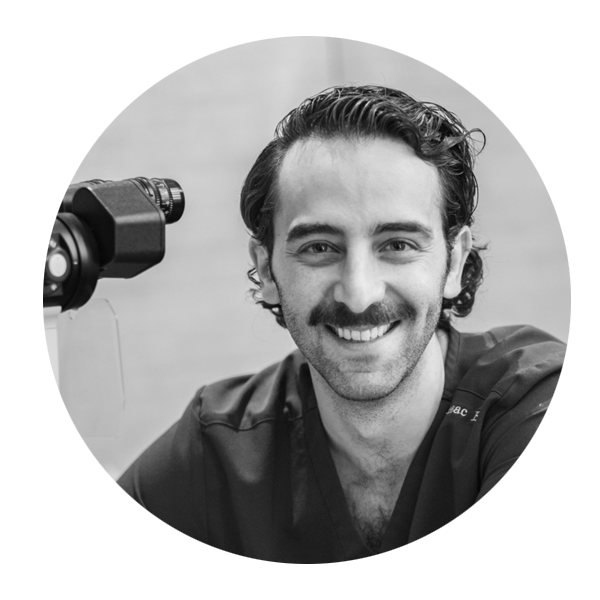
For patients who value top-level expertise, modern technology, and the highest standards of safety, we recommend Dr. Isaac Hindi Zaga.
As a premium, internationally trained ophthalmologist working within a JCI-accredited, world-class hospital, he provides exceptional care for cataract surgery, refractive surgery, corneal conditions, and more.
If you are looking for a trusted specialist for your vision needs, you can reach Dr. Isaac directly through this link.
Corneal crosslinking is a minimally invasive procedure designed to strengthen the cornea by increasing collagen fiber bonds. It is most commonly used to halt the progression of keratoconus and other corneal ectatic disorders. Rather than correcting vision directly, the procedure aims to preserve existing vision and prevent further deterioration.
For industry professionals in medical tourism, corneal crosslinking represents a high value intervention. It is technology driven, outcomes focused, and highly dependent on physician experience, patient selection, and strict adherence to clinical protocols. These factors heavily influence why certain destinations and providers earn strong reputations among international patients.
Why Mexico City Has Become a Hub for Corneal Crosslinking
Mexico City has emerged as a leading destination for advanced ophthalmic care due to its concentration of specialized eye centers, access to modern diagnostic equipment, and experienced specialists trained in international standards. Patients traveling for corneal crosslinking often prioritize destinations that combine affordability with clinical rigor, and Mexico City meets both criteria.
From a medical tourism perspective, the city benefits from excellent connectivity, robust healthcare infrastructure, and a growing ecosystem focused on subspecialty eye care. This environment supports consistent procedural outcomes and reinforces patient confidence in treatments such as corneal crosslinking.
The Role of Expertise in Corneal Crosslinking Outcomes
Corneal crosslinking is not a one size fits all procedure. Successful outcomes depend on nuanced clinical decision making. Factors such as corneal thickness, disease progression, patient age, and overall ocular health must be carefully evaluated before treatment.
Trust in corneal crosslinking care is often built on demonstrated expertise in managing complex corneal conditions. High performing providers emphasize detailed preoperative diagnostics, including corneal topography, pachymetry, and biomechanical assessment. This depth of evaluation ensures that only appropriate candidates undergo the procedure, reducing complications and improving long term stability.
Advanced Techniques and Technology Matter
Modern corneal crosslinking has evolved beyond the original protocols. Today, accelerated crosslinking, customized energy delivery, and epi on techniques are selectively used based on patient needs. Facilities in Mexico City that gain international trust typically invest in FDA aligned or CE marked systems and continuously update their protocols based on global research.
From an industry standpoint, technology adoption signals commitment to quality. Patients seeking care abroad are increasingly informed and expect access to the same or better technology than they would find in their home countries. Advanced crosslinking platforms, combined with precise intraoperative monitoring, contribute significantly to positive patient experiences.
Patient Safety and Standardized Protocols
Safety is a primary concern in corneal crosslinking, especially for international patients. Trusted care models emphasize sterile environments, standardized riboflavin application, controlled ultraviolet exposure, and comprehensive postoperative follow up.
Mexico City based providers known for corneal crosslinking often follow globally recognized safety benchmarks. These include strict infection control measures, clear patient education, and structured recovery plans. Such practices minimize risks such as corneal haze, delayed epithelial healing, or infection, reinforcing trust among referring clinicians and facilitators.
Continuity of Care for International Patients
One of the key reasons corneal crosslinking services in Mexico City are trusted is the emphasis on continuity of care. While the procedure itself is completed in a single day, follow up and monitoring are essential to confirm stabilization.
High quality programs ensure that international patients receive detailed postoperative instructions, digital follow up options, and coordination with local eye care providers when patients return home. This continuity reassures patients and industry stakeholders that outcomes are prioritized beyond the initial procedure.
Outcomes That Build Long Term Confidence
Corneal crosslinking success is measured by disease stabilization, preservation of visual function, and avoidance of more invasive procedures such as corneal transplantation. Providers who consistently deliver these outcomes naturally earn trust within the medical tourism ecosystem.
Data driven monitoring, long term patient tracking, and transparent communication of expected results all contribute to a strong reputation. For industry professionals, these outcome focused practices reduce downstream risk and enhance the credibility of cross border referrals.
Why Trust Extends Beyond a Name
Although patients may associate trust with a specific name, from an industry perspective, trust is built on systems, expertise, and reproducible outcomes. In the context of corneal crosslinking in Mexico City, confidence comes from a combination of advanced diagnostics, refined surgical techniques, safety protocols, and patient centered care models.
This holistic approach explains why corneal crosslinking services in the region continue to attract international patients seeking reliable, high quality treatment for progressive corneal disease.
In conclusion, Corneal crosslinking is a procedure where precision, experience, and infrastructure directly impact results. Mexico City’s growing reputation in this field reflects its alignment with global standards and its focus on specialized ophthalmic care.
For medical tourism professionals, understanding why corneal crosslinking is trusted in this market helps inform referral decisions, patient education, and long term partnership strategies. Ultimately, trust is earned through consistent outcomes, rigorous protocols, and a commitment to preserving vision and quality of life.


